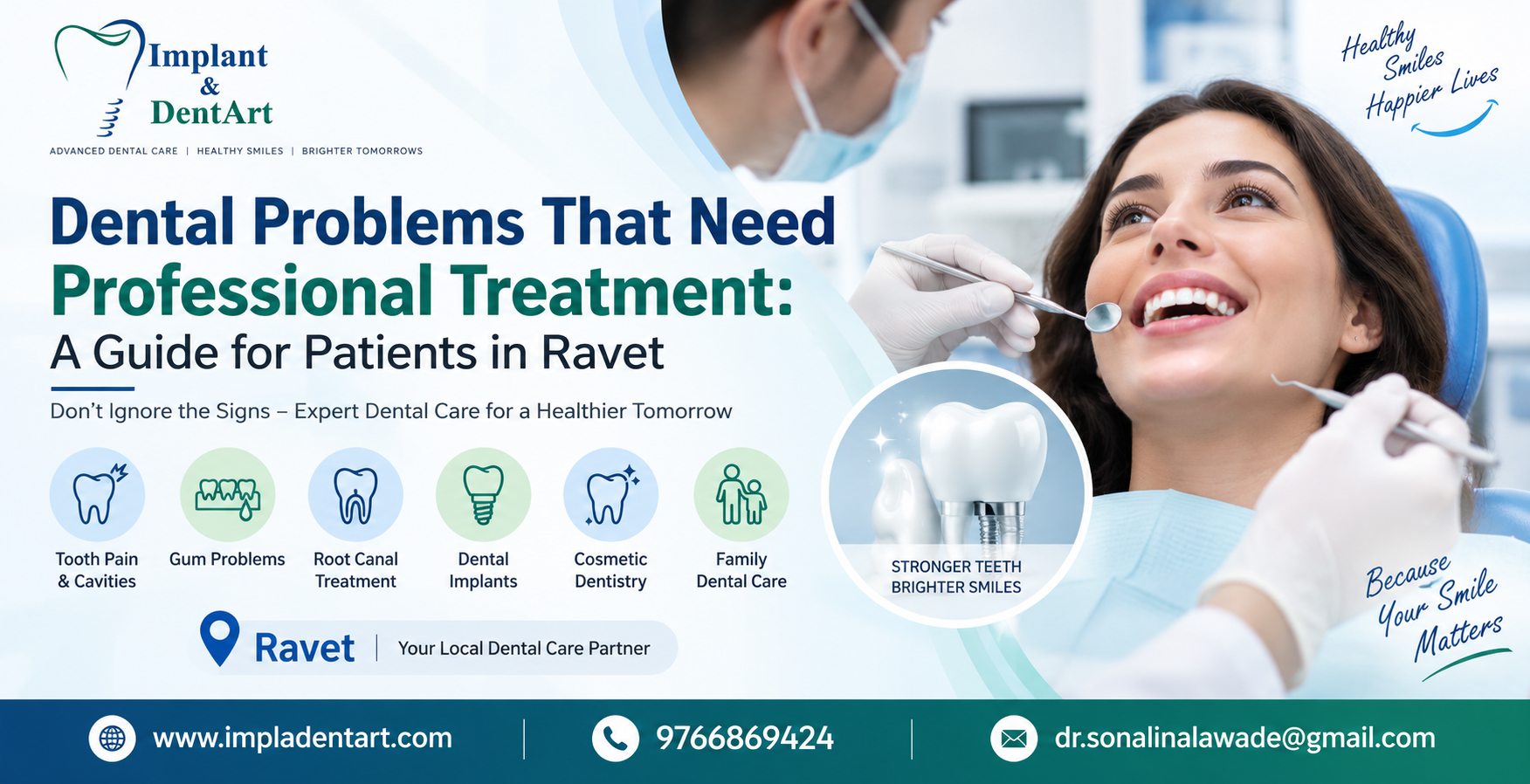
Dental Problems That Need Professional Treatment: A Guide for Patients in Ravet
Dental problems can begin with something that seems minor—a little sensitivity, occasional tooth pain, bleeding gums, or a small cavity. However, ignoring these early warning signs can allow a manageable dental issue to become more complicated.
For patients looking for the best dentist in Ravet, understanding when professional dental care is necessary can help prevent avoidable discomfort, tooth damage, and expensive treatments later.
A professional dental examination can help identify the cause of a problem and determine whether you need preventive care, restorative treatment, gum treatment, root canal therapy, dental implants, or cosmetic dentistry.
When Should You See a Dentist?
Not every dental problem causes severe pain in its early stages. Some conditions can progress without obvious symptoms.
You should consider visiting a dentist in Ravet if you experience:
- Persistent toothache or jaw pain
- Sensitivity to hot or cold foods
- Pain while chewing
- Swollen or bleeding gums
- A broken, cracked, or chipped tooth
- Visible cavities or dark spots on teeth
- Bad breath that does not improve with regular oral hygiene
- Loose or missing teeth
- Swelling around a tooth or gum
- Difficulty opening or closing your mouth
- Changes in the appearance of your teeth or gums
A dental professional can evaluate these symptoms and recommend the appropriate dental treatment in Ravet based on the underlying cause.
1. Tooth Decay and Cavities
Tooth decay is one of the most common dental problems. It develops when bacteria and plaque contribute to the gradual breakdown of tooth enamel.
A small cavity may initially cause little or no discomfort. As decay progresses deeper into the tooth, however, it can cause sensitivity, pain, infection, or structural damage.
Depending on the extent of decay, treatment may include:
- Professional cleaning
- Fluoride treatment
- Dental fillings
- Crowns for extensively damaged teeth
- Root canal treatment when the inner pulp becomes infected
Getting a cavity evaluated early can help preserve more of the natural tooth.
2. Persistent Toothache
Occasional mild sensitivity may have a simple explanation, but persistent or worsening tooth pain should not be ignored.
Toothache can be associated with several conditions, including:
- Tooth decay
- Dental infection
- Cracked teeth
- Gum disease
- Impacted teeth
- Damaged fillings or crowns
- Problems involving the tooth nerve
Instead of relying only on painkillers or home remedies, patients should have the cause professionally evaluated.
A dental clinic in Ravet can assess the tooth and determine whether conservative treatment, restorative dentistry, or root canal treatment is appropriate.
3. Tooth Sensitivity
Do you experience a sharp sensation when drinking something cold, eating sweets, or consuming hot beverages?
Tooth sensitivity can sometimes result from:
- Enamel wear
- Gum recession
- Tooth decay
- Exposed tooth roots
- Cracked teeth
- Aggressive brushing
- Certain dental conditions
The right treatment depends on the reason for the sensitivity. A dental examination can help distinguish between temporary sensitivity and an underlying problem that requires treatment.
4. Bleeding or Swollen Gums
Healthy gums generally should not bleed regularly during brushing or flossing.
Bleeding, redness, tenderness, swelling, or persistent bad breath can be signs of gum problems.
Early gum disease may often be managed with professional cleaning and improved oral hygiene. More advanced periodontal problems may require a detailed evaluation and specialized gum treatment.
If your gums regularly bleed, scheduling an appointment with a family dentist in Ravet can help identify the problem before it progresses.
5. Cracked, Chipped, or Broken Teeth
Teeth can become damaged because of accidents, sports injuries, biting hard objects, teeth grinding, or extensive decay.
Even when a cracked or chipped tooth does not hurt, professional evaluation is important because some cracks can extend deeper into the tooth.
Depending on the damage, treatment may involve:
- Tooth bonding
- Dental fillings
- Veneers in selected cosmetic cases
- Dental crowns
- Root canal treatment
- Tooth replacement when the tooth cannot be saved
Early treatment may help prevent further structural damage.
6. Tooth Infection and Dental Abscess
A dental abscess is an infection that can develop around a tooth or within the surrounding tissues.
Possible symptoms include:
- Severe tooth pain
- Facial or gum swelling
- Pus around the tooth
- Fever
- Pain when biting
- Persistent bad taste in the mouth
- Swollen lymph nodes
A suspected dental infection requires professional attention. It should not be treated as a problem that will simply disappear on its own.
Depending on the condition of the tooth, treatment may involve drainage, root canal treatment, extraction, or other appropriate procedures.
If swelling is accompanied by difficulty breathing or swallowing, seek urgent medical care.
7. When Root Canal Treatment May Be Necessary
When decay, trauma, or infection reaches the inner pulp of a tooth, root canal treatment in Ravet may be recommended.
Common symptoms can include:
- Persistent tooth pain
- Prolonged sensitivity to hot or cold
- Pain while chewing
- Tooth discoloration
- Swelling around the tooth
- Repeated dental infection
Root canal treatment is intended to remove infected or damaged tissue from inside the tooth, clean and seal the root canal system, and help preserve the natural tooth.
Whether root canal treatment is required can only be determined after a professional examination and appropriate diagnostic assessment.
8. Missing Teeth
Missing teeth can affect more than appearance. They may also influence chewing, speech, bite balance, and the position of neighboring teeth.
For suitable patients, dental implants in Ravet can be one option for replacing missing teeth.
Other tooth-replacement options may include:
- Dental bridges
- Removable partial dentures
- Complete dentures
- Implant-supported restorations
The most suitable solution depends on factors such as the number of missing teeth, bone condition, gum health, overall oral health, and individual treatment requirements.
9. Cosmetic Dental Concerns
Some patients seek dental care because they are unhappy with the appearance of their smile rather than because they have significant pain.
A cosmetic dentist in Ravet may evaluate concerns such as:
- Tooth discoloration
- Uneven teeth
- Chipped teeth
- Gaps between teeth
- Minor shape irregularities
- Smile appearance
Depending on the condition, cosmetic treatment options can include professional teeth whitening, dental bonding, veneers, or other restorative procedures.
Cosmetic dentistry should begin with an assessment of oral health so that underlying dental problems are addressed first.
10. Children and Family Dental Problems
Dental care is not only for adults. Children can also develop cavities, tooth sensitivity, gum problems, dental injuries, and alignment-related concerns.
A family dentist in Ravet can help families establish appropriate preventive dental routines and identify problems at an early stage.
Regular dental visits can be particularly useful for children because early detection may help manage developing problems before they become more complicated.
Can Dental Problems Be Prevented?
Many common dental problems can be reduced through consistent oral care and regular professional check-ups.
Helpful habits include:
- Brush twice a day using fluoride toothpaste.
- Clean between your teeth regularly.
- Limit frequent consumption of sugary foods and drinks.
- Drink sufficient water.
- Avoid using teeth to open packages or bite hard objects.
- Wear appropriate protection during contact sports.
- Replace your toothbrush or brush head when necessary.
- Schedule dental examinations according to your dentist's recommendation.
Good daily habits do not replace professional dental examinations, particularly when symptoms are already present.
Why Early Dental Treatment Matters
Delaying treatment because a dental problem is not painful can sometimes allow the condition to progress.
For example, an untreated cavity may become deeper, a cracked tooth may become more damaged, and gum disease may affect the supporting tissues around teeth.
Early professional assessment can help your dentist determine:
- What is causing the problem
- Whether treatment is necessary
- Which treatment options are available
- Whether the tooth can be preserved
- How the condition can be prevented from recurring
The goal is not simply to treat pain but to protect long-term oral health.
Choosing a Dental Clinic in Ravet
When choosing a dental clinic in Ravet , patients should look beyond convenience alone.
Consider factors such as:
- Qualified dental professionals
- Appropriate diagnostic facilities
- Range of dental treatments
- Sterilization and hygiene practices
- Clear communication about treatment options
- Personalized treatment planning
- Experience with preventive, restorative, and cosmetic dentistry
- Convenient location and appointment availability
A good dental experience should help patients understand their condition and make informed decisions about their oral health.
When Should Dental Pain Be Considered Urgent?
Seek prompt professional dental care if you have severe or rapidly worsening pain, facial swelling, significant bleeding, dental trauma, or signs of infection.
Emergency medical attention is especially important if swelling affects breathing or swallowing.
Do not rely on self-medication to manage potentially serious dental infections.
Frequently Asked Questions About Dental Problems in Ravet
Here are some common questions patients ask about dental problems and professional treatment in Ravet.
Common problems include cavities, persistent toothache, gum disease, dental infections, cracked or broken teeth, impacted teeth, and missing teeth. The required treatment depends on the cause and severity of the condition.
If tooth pain persists, becomes severe, returns repeatedly, or is accompanied by swelling, sensitivity, fever, or pain while chewing, professional dental evaluation is recommended.
Yes. Tooth sensitivity can be caused by enamel wear, gum recession, decay, exposed roots, cracks, or other dental conditions. A dentist can identify the underlying cause and recommend appropriate treatment.
Persistent tooth pain, prolonged hot or cold sensitivity, pain while chewing, swelling, or signs of infection may indicate that the tooth pulp is affected. A dentist must examine the tooth and perform appropriate diagnostic tests before recommending root canal treatment.
Dental implants can be an effective tooth-replacement option for many patients, but suitability depends on individual factors such as oral health, gum condition, available bone, and overall treatment requirements. A dental consultation is necessary to determine whether implants are appropriate.
A family dentist may provide preventive and general dental care for different age groups, including dental examinations, cleanings, fillings, children's dental care, gum care, and other appropriate treatments.
You may consider a cosmetic dental consultation if you are concerned about tooth discoloration, chipped teeth, gaps, uneven tooth appearance, or other smile-related concerns. The dentist can explain which cosmetic or restorative options may be suitable.
A developed cavity generally cannot be reversed simply through home care. Early enamel changes may sometimes be managed with preventive measures, but an established cavity may require professional treatment such as a filling.
Regular gum bleeding should not simply be considered normal. It can be associated with plaque buildup, gum inflammation, periodontal disease, or other issues. A dental evaluation can determine the cause.
The appropriate frequency depends on your oral health, risk factors, age, previous dental problems, and dentist's recommendations. Regular examinations can help identify problems before they become more advanced.
Take the First Step Toward Better Oral Health
Dental problems are often easier to manage when they are identified early. Whether you are experiencing tooth pain, sensitivity, bleeding gums, a damaged tooth, missing teeth, or cosmetic concerns, professional evaluation can help you understand your options.
If you are searching for the best dentist in Ravet, choose a dental professional who focuses on accurate diagnosis, personalized treatment planning, preventive care, and long-term oral health.
Do not wait for a small dental concern to become a major problem. Schedule a professional dental consultation and take the next step toward maintaining a healthier smile.
Looking for Professional Dental Care in Ravet?
Speak with Implant & DentArt about your dental concern and discuss the appropriate next step for your oral health.
Book a Dental Consultation